
Schertz Previous Residents by Era
A backward Schertz address search has different sources for different periods. A modern Schertz parcel card supplies the situs address, property identifier, subdivision, lot and block, while a deed index ties transfers to the legal description. That Schertz record trail can lead to earlier names, but it does not prove every person who stayed at the property. For Schertz household history, compare the transfer dates with the regional directory shelf, telephone volumes, census schedules, and family notices. The useful Schertz records are split among Guadalupe, Bexar, and Comal counties because Schertz city limits cross all three.
| Schertz source | Years available | Schertz custody route | Address evidence |
|---|---|---|---|
| Schertz Guadalupe official records | Books described from the 1820s; pre-1970 index route | County Clerk, Schertz satellite, or Seguin | Deeds, plats, liens, transfers, and party chain |
| Schertz Comal ROAM | Advertised as Sovereignty to present | Comal County Clerk online record route | Official-record index and page-image route |
| Cole Blue Book | 1960 to 2009, incomplete | San Antonio Public Library | Street and house-number listings with phone information |
| Schertz federal census context | 1790 to 1950 released | National Archives and library databases | Household names and year-specific details |
| Schertz CityView | Current portal; earlier range not stated | Schertz city address and parcel locator | Permit, inspection, planning, and code events |
Use the current Schertz parcel first when the question starts with a street address. Use a Schertz directory or census first when a dated family name is already known, then return to the Schertz parcel and clerk record to test whether the address is the same place. A mailing address can differ from the physical situs, so it is a lead rather than proof that a past resident was at the parcel.
Schertz Previous Residents Start With Parcels
Open the Schertz CityView property locator with the street address or parcel number, then use the map and Schertz city-limit or ETJ context to identify the responsible county. A Schertz mailing label alone is not enough. Guadalupe and Comal appraisal searches accept street number and simple street name, while Bexar tax search uses its own address format. Record the exact Schertz situs string, parcel or geographic ID, subdivision, lot and block, and the county shown before moving backward.
That first capture prevents a common error: mixing one Schertz address with a similarly named Schertz parcel in a neighboring county. A Schertz legal description is the stable property description used in deeds and plats. It may use a subdivision, lot and block, or an abstract or survey description. It is often more durable than a street number when an old deed or newspaper uses an earlier label. The Comal ROAM land-record search is one documented route when the parcel falls in Comal County.
Use the county result to preserve the Schertz parcel description and recording references before comparing any historical household source.
Note: A county appraisal result is useful for parcel identity, but it is not a title opinion or a complete account of who lived there.
Trace Schertz Previous Residents Through Deeds
Once the Schertz parcel is fixed, the property trail runs through the correct county clerk, not a general city list. Search today’s owner as the grantee, meaning the party who received the property, in the county official-record index. Open the Schertz purchase deed, note the seller, recording date, instrument number, and legal description, and then search that seller as an earlier grantee. The seller may be an individual, an estate, a trust, an entity, a lender, or a probate representative. Each Schertz change requires the same careful comparison of description and date.
- Save the current appraisal result with the county, parcel identifier, situs, mailing address, and legal description.
- Find the current owner as a grantee in the county clerk’s official-record index.
- Read the deed for the grantor, the party transferring the property, the recording date, and the instrument or book reference.
- Search that grantor as a prior grantee, using the legal description to separate same-name parties.
- Repeat the sequence, then use a clerk counter, written research request, or archival route when online coverage does not reach the needed document.
- Grantor
- The party transferring an interest in a recorded document.
- Grantee
- The party receiving that interest, often the buyer in a deed.
- Chain of title
- The documented sequence of transfers for a parcel. County clerks record documents but do not guarantee clear title.
- Legal description
- The lot, block, subdivision, abstract, or survey wording that identifies land beyond its current street label.
Keep the date, county, instrument number, and legal description beside each transfer. That small record set makes the backward Schertz sequence testable when a party name repeats.
Schertz Grantor and Grantee Loop
The Schertz deed loop is the core evidence for past owners, but it needs a county-specific finish. Guadalupe County offers its official-record page with a separate pre-1970 public-record index route. Bexar’s public-record search provides online viewing and plain copies, with certified copies requested through the county. Comal ROAM advertises a Sovereignty-to-present search description and an official-image route by page. An online record gap is not proof that the transfer never occurred. It may mean the older book, image, or index sits at the clerk office or needs a document-specific request.
A Guadalupe County electronic certified-copy notice is useful for a Schertz parcel in Guadalupe County because the county provides a copy-order route alongside its official-record services.
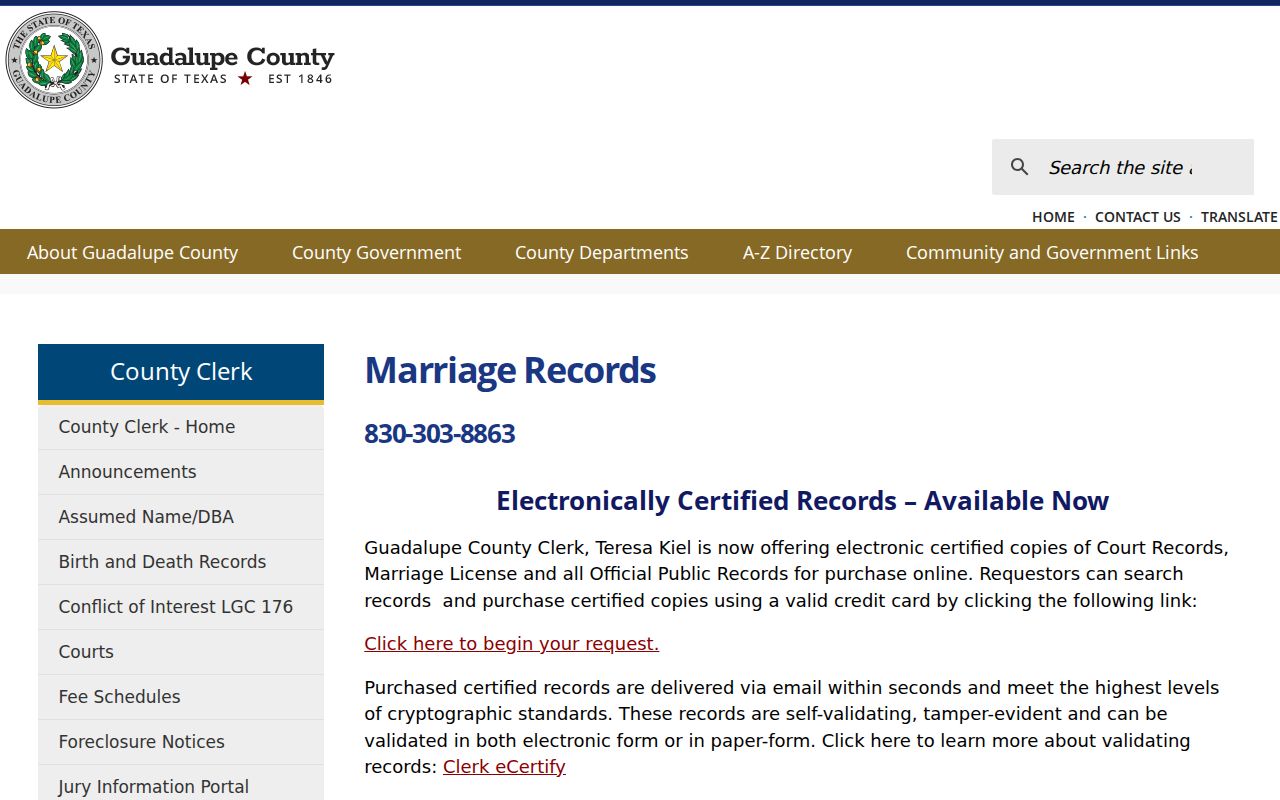
Note: Electronic certified copies are a Schertz copy-order path, not a substitute for checking each linked deed and its recorded description.
Schertz Pre-1970 Records Trail
Guadalupe County describes historic documents dating to the 1820s and has a preservation effort that repairs and images old material. That makes a Schertz record from the city’s Guadalupe County core worth pursuing even if a present-day portal result is thin. For a Comal Schertz parcel, use the clerk’s land-record route, then the documented research-request procedure when a specific document needs staff research or a copy. Bexar Schertz records require their own clerk search and should never be merged into a Guadalupe result merely because both properties use Schertz in the address.
The Texas State Library and Archives Commission is a historical government-record route when county or regional materials need wider archival context.
Archive material can help locate Schertz county and historical-government resources, while the recorded parcel document remains the anchor for an address trail.
Schertz Past Residents in Directories
Deeds follow recorded interests, not every household. The Schertz household layer comes from regional print and microfilm collections. San Antonio Public Library holds city directories from 1877 to 1970 on microfilm, incomplete hard copies from 1960 to 2009, and the Cole Blue Book criss-cross run from 1960 to 2009, also incomplete. The Blue Book is arranged by street and house number, which makes it useful after a Schertz parcel and its address have been fixed. San Antonio Genealogical and Historical Society catalogs a 1963 Polk’s Seguin directory and 1976, 1978, and 1980 Seguin directories as Guadalupe County proxies.
Confirm whether a particular volume covers Schertz or the older Cut-Off label before treating an omission as meaningful. Special collections, maps, clipping files, and microfilm may not appear in the library catalog. The regional holdings and their access limits are described in the Schertz Directory Book collection notes.
Note: A directory listing is a dated listing, not proof of ownership or a full count of everyone at an address.
Schertz Census Pairing for Previous Residents
Pair a Schertz directory year with the nearest released census schedule rather than collapsing several years into one story. Federal personal schedules from 1790 through 1950 are public under the 72-year rule. Depending on the year, a schedule may show household names, ages, birthplaces, relationships, an address, or other period-specific details. The 1890 census was largely destroyed, so a Schertz address trail may need 1880, 1900, and later comparisons instead. Use the directory’s street spelling, nearby cross streets, and county as controls when matching a Schertz household.
The National Archives census research portal provides the federal starting point for this household stage.
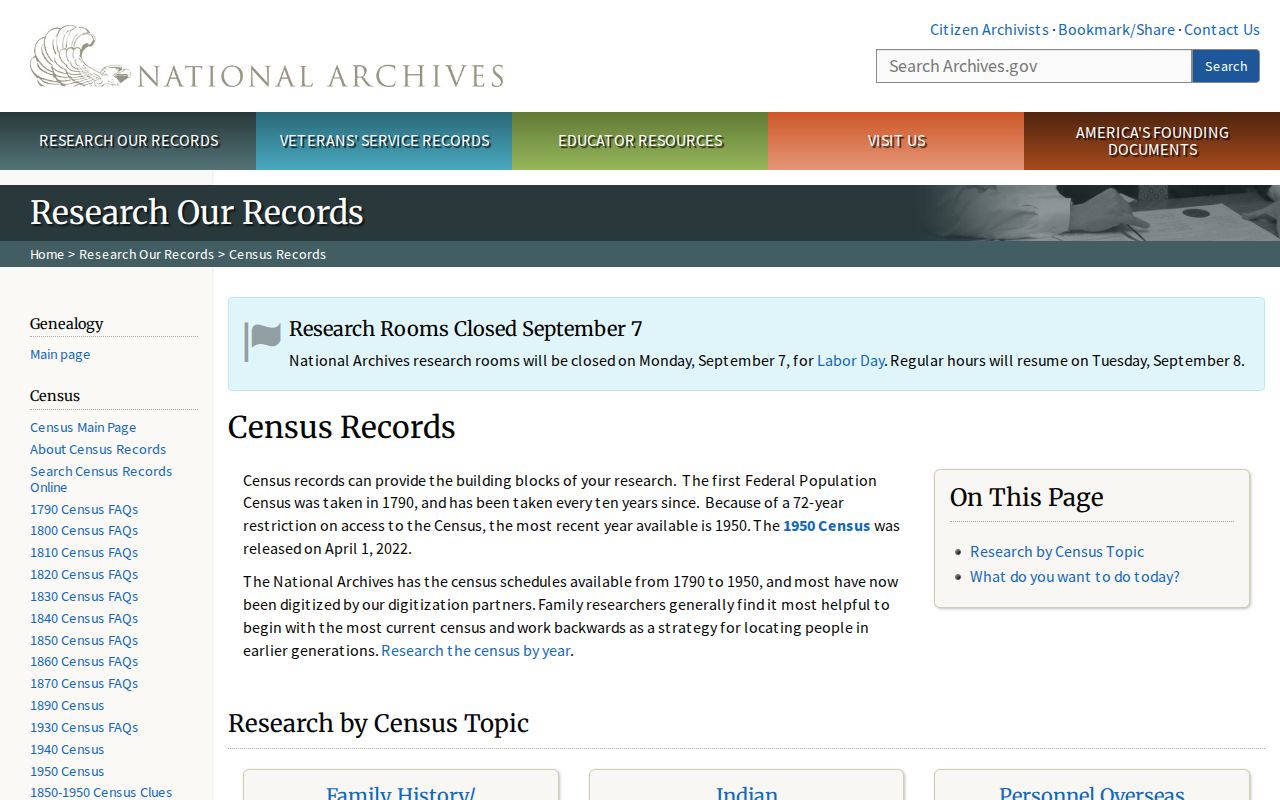
A Schertz census match is stronger when its place, date, and surrounding record trail agree with the county parcel and directory evidence.
- Choose the directory or telephone volume closest to a released census year.
- Record the volume title, edition, page, street spelling, and house number exactly as shown.
- Check the census place and household against the county and cross-street context.
- Use obituary, probate, or later deed evidence to explain a move, death, estate transfer, or same-name conflict.
Cut-Off Names in Schertz Records
Older search results may not use the city name now printed on a parcel card. The settlement was called Cut-Off before the official April 6, 1899 renaming to Schertz. The railroad arrived earlier, followed by a post office, and those shifts help explain why an old directory, newspaper, or deed reference may use Cut-Off, Guadalupe County rural wording, a cross street, or a legal description instead of a current Schertz address. No specific municipal street-renumbering year was located in the official sources.
When a Schertz number fails, search the old and current place labels, retain nearby roads and landmarks, and compare lot, block, abstract, or survey wording. Sanborn maps and SAPL house-history materials can supply Schertz structure context where their geographic coverage reaches the property, but they are not resident evidence. CityView permits can date a public project or inspection trail; the portal’s historical start date is not stated.
Schertz Previous Residents Trail Endpoints
Probate, obituary, cemetery, and newspaper records can close a Schertz previous-resident trail when a transfer points to an estate or when a household disappears between directories. The San Antonio Genealogical and Historical Society catalogs a Guadalupe County WPA probate index for 1846 to 1939. Schertz Public Library offers remote NewsBank access for listed local and regional newspapers, while San Antonio Public Library supplies microfilm and historical collections. Verify a Schertz family notice against a recorded deed or probate file because an obituary can name a later family contact rather than the former address.
Schertz past-resident research is suitable for family history, heir research, and the history of a parcel. It is not a reason to infer a living Schertz household from an old record.
Lawful use. Use Schertz previous-resident records for personal, historical, or family research. Texas law prohibits stalking and harassment, and protected addresses must not be pursued or republished.
Note: Save the source date, county, and record number with each finding so a later reader can distinguish evidence from an unresolved lead.